The Carpenter’s Tale
I decided to buy a camera, after years of simply using my iPhone, because I wanted to capture the colors and the beauty of the bustling insect life in my backyard. Three years ago, I started planting wildflowers native to Michigan: Bee Balm, Echinacea, Goldenrod, Aster, Rose Milkweed. And since then, every year I’ve had more bees, and butterflies, and insects of all sorts visit my tiny backyard, from spring to late fall.
But I had not imagined (though I could have!) that a camera that allows me to see so much detail would also carry some risk. Namely, the risk of becoming even more attached to the creatures that inhabit my garden; closer to their life stories, or to what I imagine their life stories to be.
This was the case with the Carpenter.
On Monday afternoon, I noticed a bee crawling in the grass, far from the flowers, and definitely not flying. Had I not seen her, I could easily have crushed her. I offered her a stick and she crawled on it right away. I deposited her on the cone of a coneflower that was resting on the ground. I was afraid that she would fall if I put her any higher.
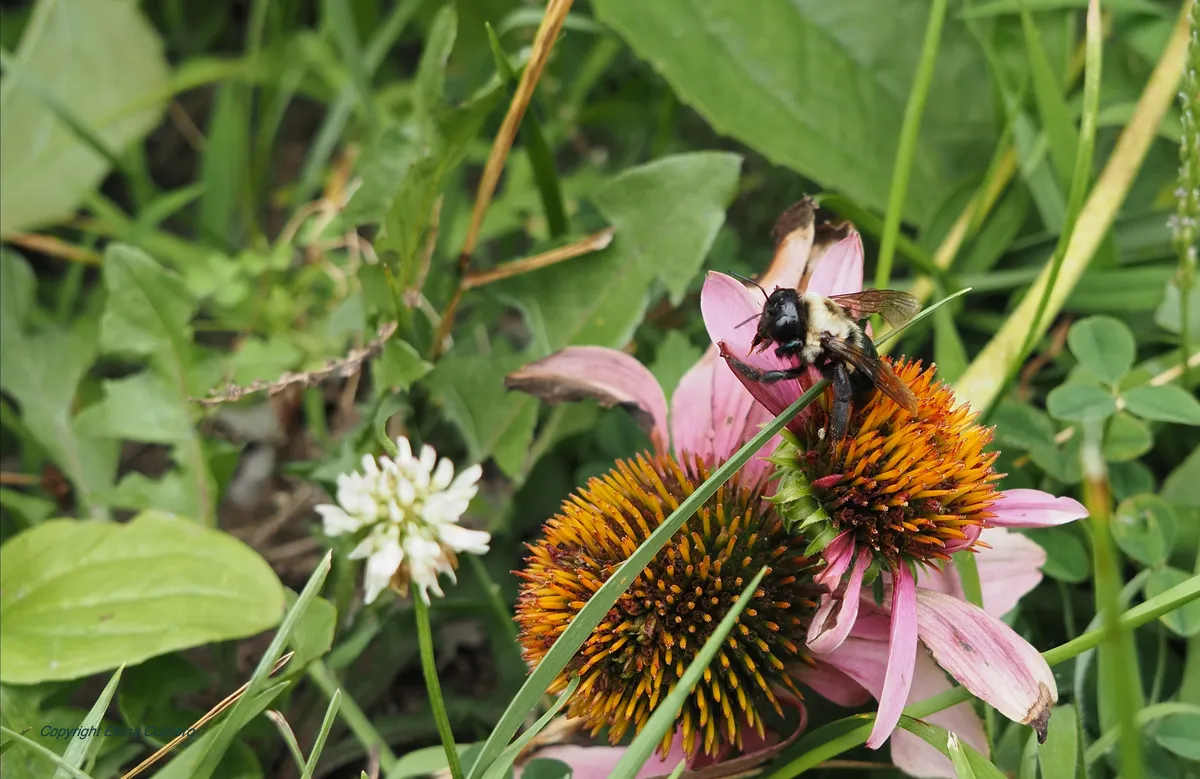 Bee on fallen flower
Once she was there, she moved and foraged, somewhat unconvinced, from the stiff, spiky disk florets that make up the Echinacea’s “cone”, but remained lethargic. I searched the web to try and figure out how to help a struggling bee and to run a differential - was he just weak or dying? The abundance of search strings (“How to tell if a bee is dying”, “How to help a weak bee”, etc.) clearly indicated that I am not the only one who feels a strong moral obligation to save creatures in distress. The bee was barely moving, and sometimes would shake or shiver for a few seconds. Her wings were frayed. A wave of sadness crashed over me, mixed with some resentment towards “Life”, in general. I let myself shed a few tears, and thanked her for being a good bee.
After watching her for more than 20 minutes, I finally forced myself to let “my” bee… be. The coffee I had put in the microwave was cold again. I pressed the 30 seconds button, added sugar… and in less than 10 minutes I found myself outside again. In that time, a few ants had already converged on the petals around the carpenter. They seemed to be testing her ability to defend herself. They could get close, but she would move enough to deter them from climbing on her.
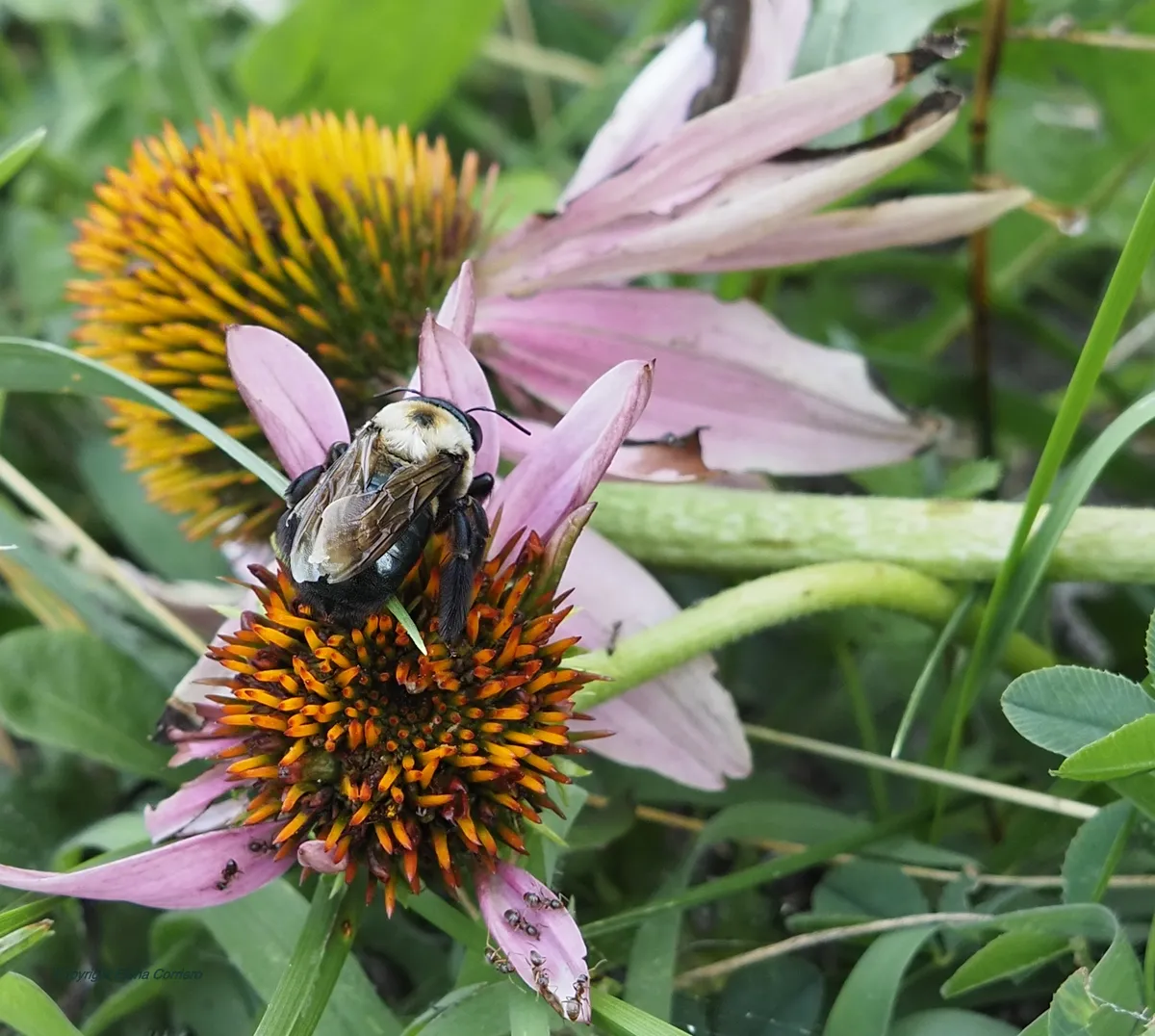 Bee surrounded by the ants
A spider was nearby, hiding between blades of grass; seemingly biding his time.
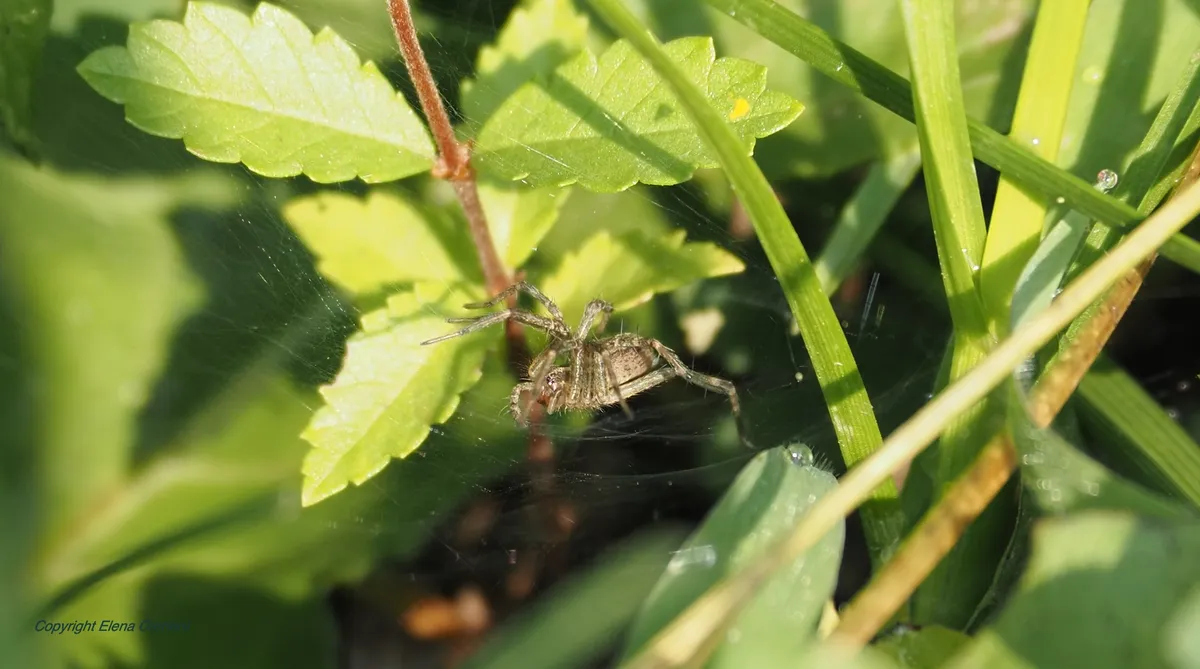 A spider was lurking between blades of grass
The scavengers and undertakers wouldn’t have to wait much longer, I thought.
Strangely, the thought brought some relief. I felt that if the carpenter did die, it would not be a futile death. Other creatures, as necessary as her, would benefit from her death. And maybe, as the energy left her, her attachment to life dwindled, too. Maybe she’d chewed enough wood, and made enough bee bread for her offspring; and enough times she had fallen asleep nestled on a flower, and there warmed up her wings as the sun rose, before taking flight - another day without rest. What a life; almost cruel in its efficiency.
When I left her, that night, I was sure next morning she’d be dead.
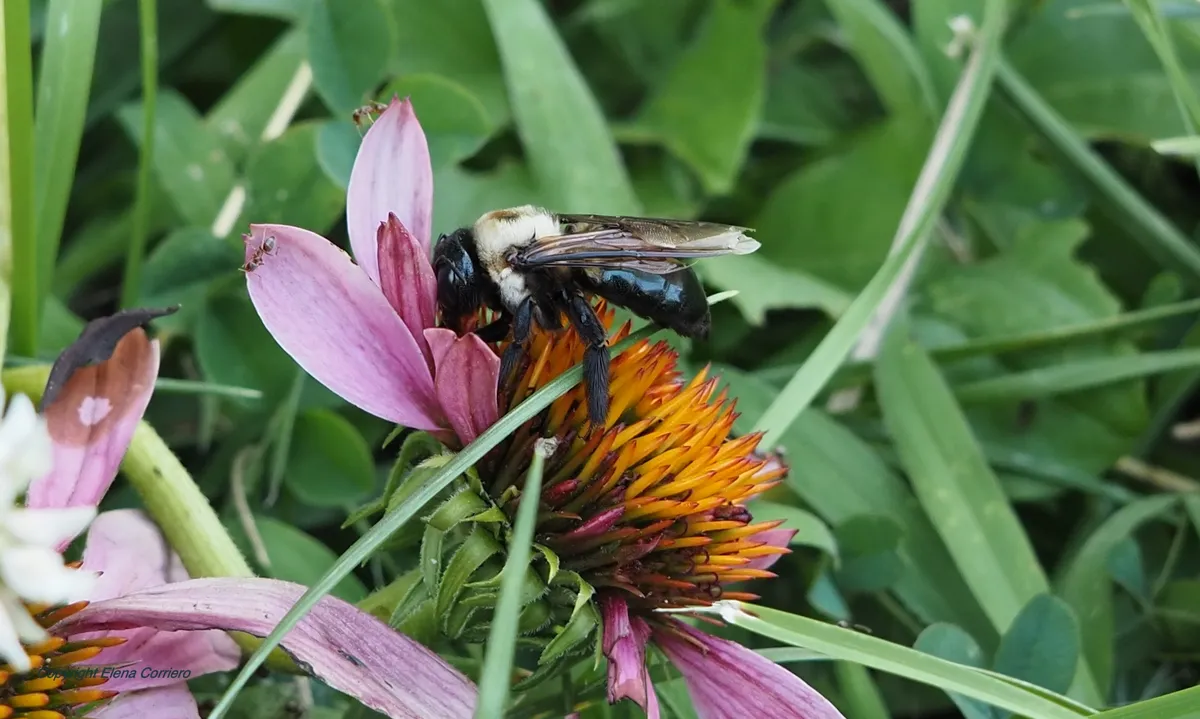 Bee resting her head on the petals
But to my disbelief, on Tuesday morning she was still there - sluggish, but alive. She was on the side of the flower, and I wondered if she’d tried to overnight beneath the petals, like I’ve often seen them do.
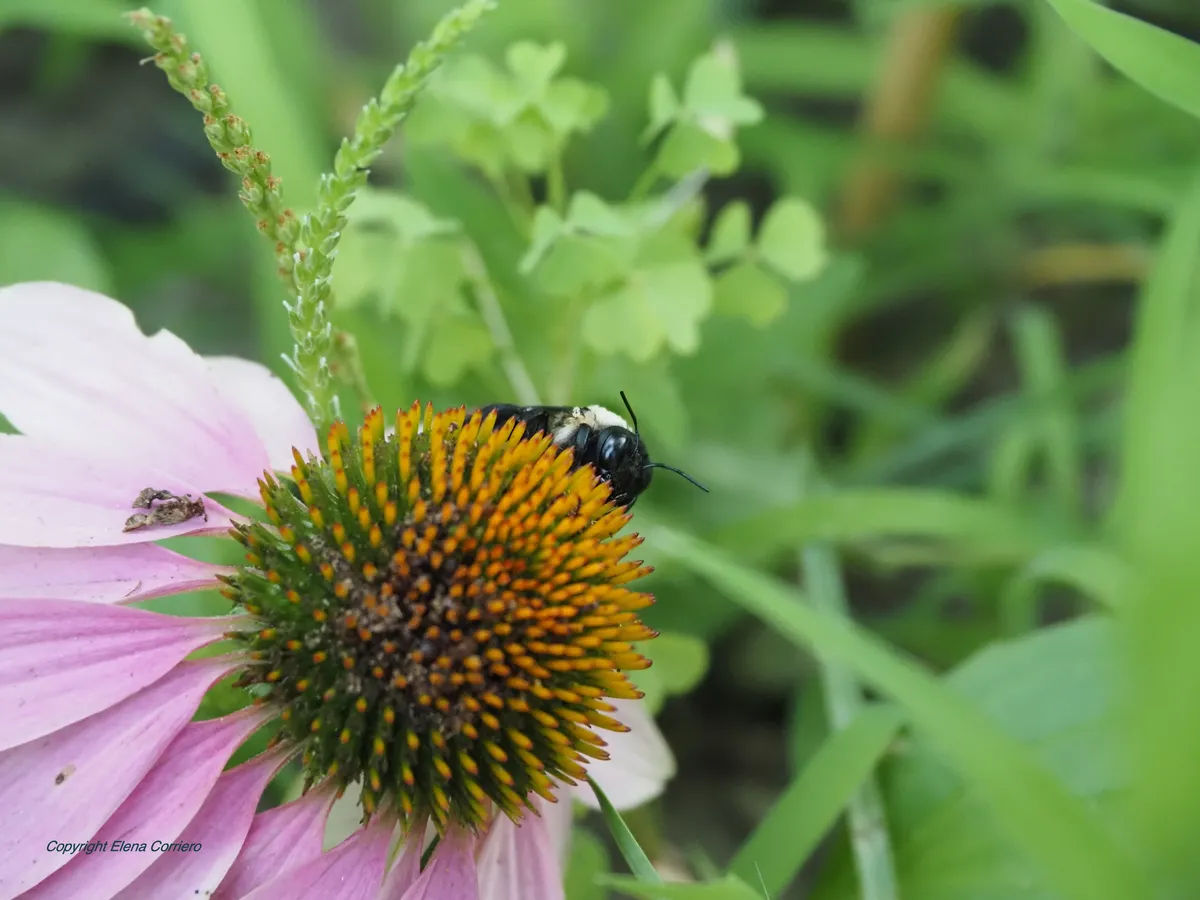 Did she hide under the petals at night?
Some of her colleagues were already buzzing around, hopping from one flower to the next, grabbing and pulling onto the bee balm florets with their sticky legs, leaving the flowers ravaged like a battlefield. The bee fluttered her wings a couple of times, almost lifted off, but didn’t seem to be really able to fly. At that point, I decided to intervene. Again I offered her a stick, reasoning that it was her choice to take it or not. She promptly grabbed on to it. I could feel the vibration of her buzz through the stick. I deposited her on properly standing coneflower that was fully exposed to the sunshine, and left her there.
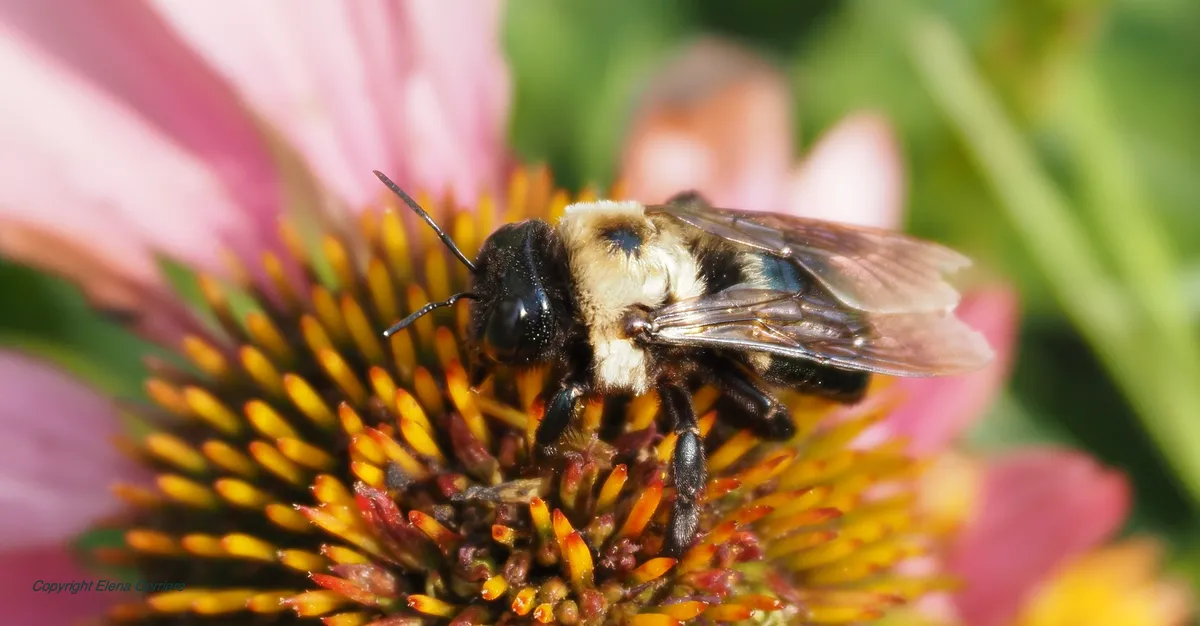 Maybe she just needed to warm up
From the window next to my work desk, I glanced out to check on her, from time to time. She did not fly, and she wasn’t the only one. A few others seemed caught in her same torpor despite the now full sun. I felt concerned again. Was it an epidemic? Had they been poisoned by one of my neighbors? Would I have to witness them all dying?
A new search (I swear I also found the time to work!) this time revealed a different side of people’s attitudes towards bees. Almost every description of the carpenters’ lifecycle - even on university webpages - seemed to end with “and this is how you kill/get rid of them”.
I did learn, however, that the bees who hibernate in their nests to overwinter die off in summer, after mating and stashing pollen for their offspring to feed on, in their sealed chambers. By mid July they’re probably exhausted and ready to let the next generation work their wings off, just like they did. That’s what I was seeing - the “old” bees at the end of their lifecycle, dropping to the ground close to their nests.
In the early afternoon, I noticed that the bees had left their flowers; they had probably sucked in from the sunshine a few more hours of energy. I found one in the grass, and put her on a flower, again, but I could not tell if she was the bee who had escaped the ants, or a different one.
Surprisingly, two bees were sharing a flower, face to face.
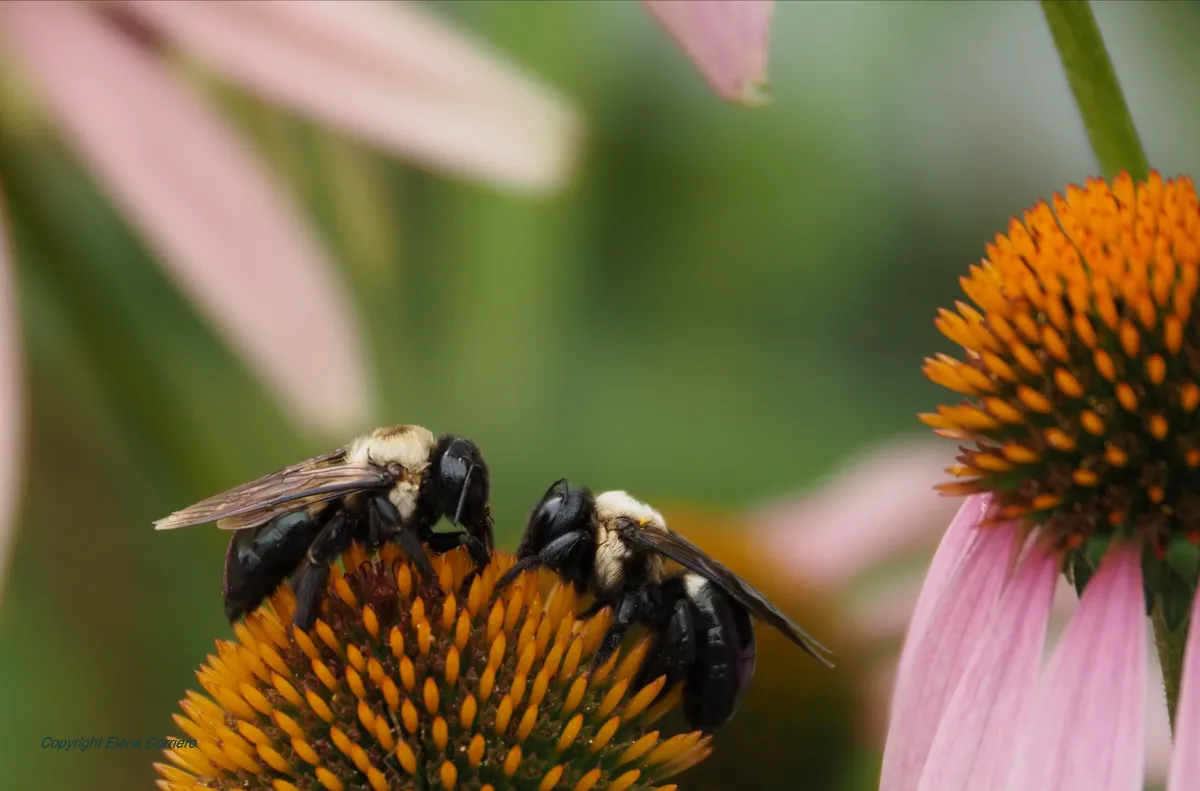 What secrets were they sharing with each other?
Until then, I had thought the bees were male, but could I have it wrong? Dodging the AI summaries serving me the same infrmation over and over, and asking me if I wanted to know how to get rid of bees or deter them, I discovered that females would be more likely to share a flower; additionally, their faces are completely black and they have pronounced mandibles. I had to conclude that all the bees I’d been observing up close were female bees, including the pair sitting face to face on the coneflower. I wondered what they were telling each other. Maybe they were sharing structural engineering secrets, and comparing the solidity and dimension of their respective nests. Or much more simply, they just didn’t have enough energy to leave; but I imagined that they were somehow keeping each other company, for a little while, in the face of what was to come.
Pretty soon, the new generation - the one that will hibernate in wood structures and hollow stems come next winter - would emerge from their perfect circular holes in the front beam of my garage, if it hadn’t already. I felt reassured knowking that the whole thing had been thought out pretty well (if not for the lack of early retirement options), and that young bees would be buzzing around the Asters and the Goldenrods once they bloomed in August.
Should I worry about the damage that bees cause to wood structures? Standing by my garage door, I’ve heard the crunching of their mandibles, in the spring. I’ve seen them hover under the holes, aim, and somehow squeeze themselves up and into the narrow openings. I’ve seen the males buzz around me when I load my kayak, making sure I don’t pose a threat to their nests. Am I making a huge mistake in choosing co-existence and letting them make their home in my wood structures, and inviting them to stay by planting all the pollinator-friendly plants that can reasonably fit into my little garden? Would the bees one day take over my backyard, and from there the entire neighborhood, and who knows, maybe even the city? Honestly, that would be quite cool to see.
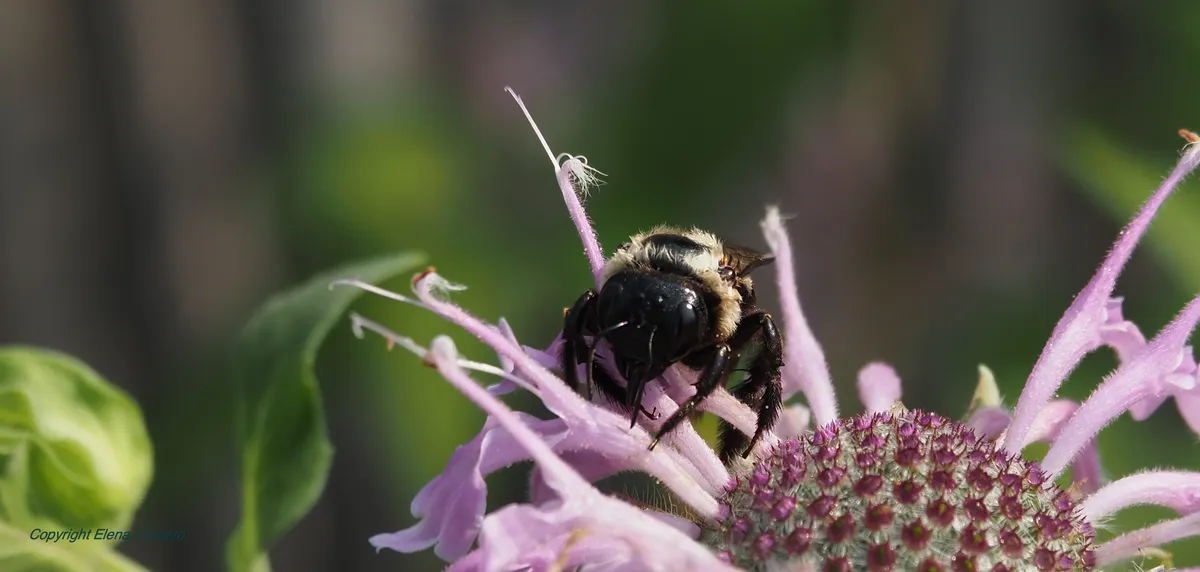 Bee takeover!
Elena Corriero August 2, 2026