The Swallowtail's Wings
A few days after his first session, I got a chance to have a second opportunity to photograph the Black Swallowtail. Apparently, butterflies will visit the same garden if they know they can find a favorite plant, like bee balm and coneflower, but honestly I would not be able to say if it was the same butterfly or a different one.
This time, the swallowtail was fluttering his wings while feeding, rather than "posing" still for the camera. Fortunately I had enough light to play with and could choose a high shutter speed, which supposedly would freeze the action. I shot at 1/2000s; not because I knew what I was doing, but simply because the number seemed high enough. Judging from the results, my guess was a good one, because in most of my shots the swallowtail appeared totally still.
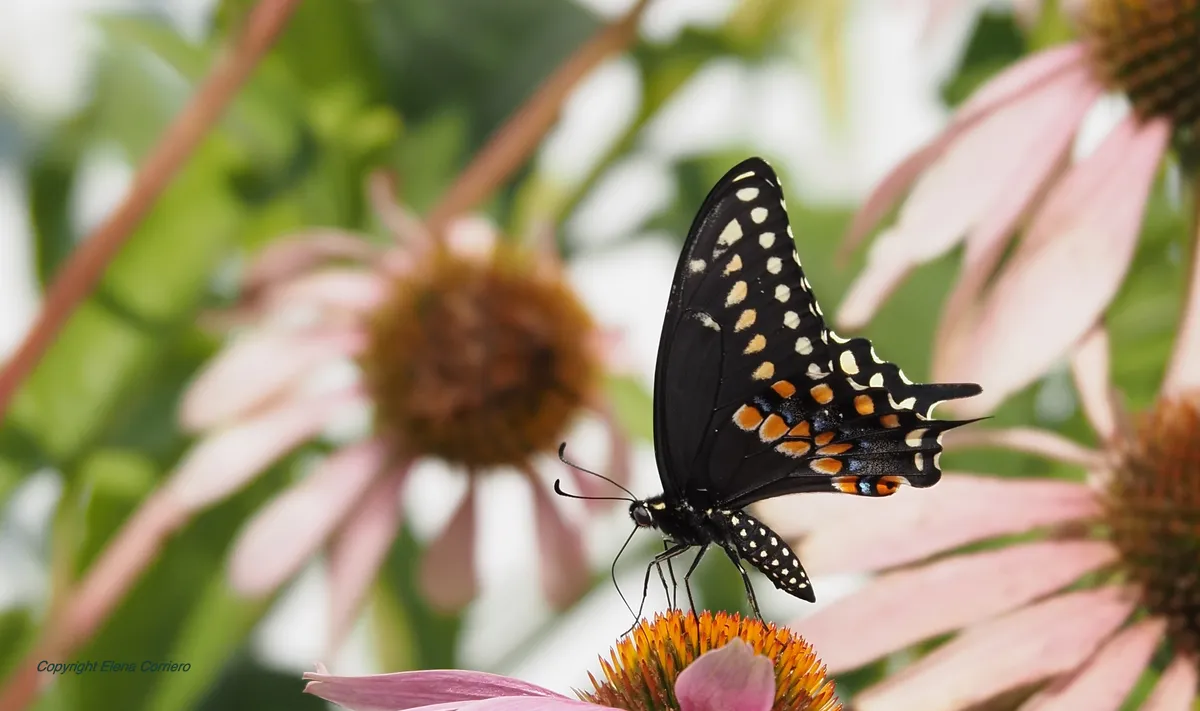
In this set of photos, it's easier to see that butterflies have four wings, not just two. I was lucky to capture a shot in which forewings and hindwings are uncoupled, for a fraction of a second.
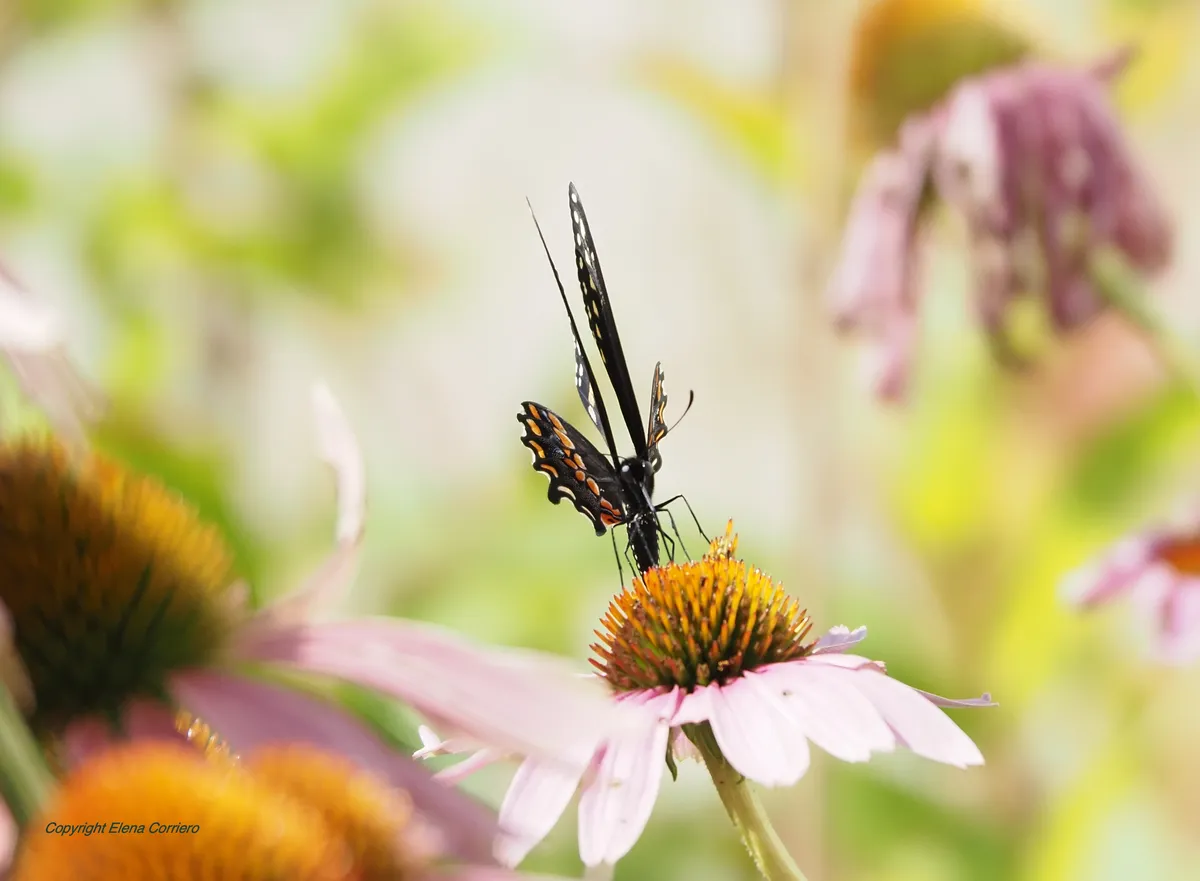
The colors are also more vivid, compared to the first set of photos.
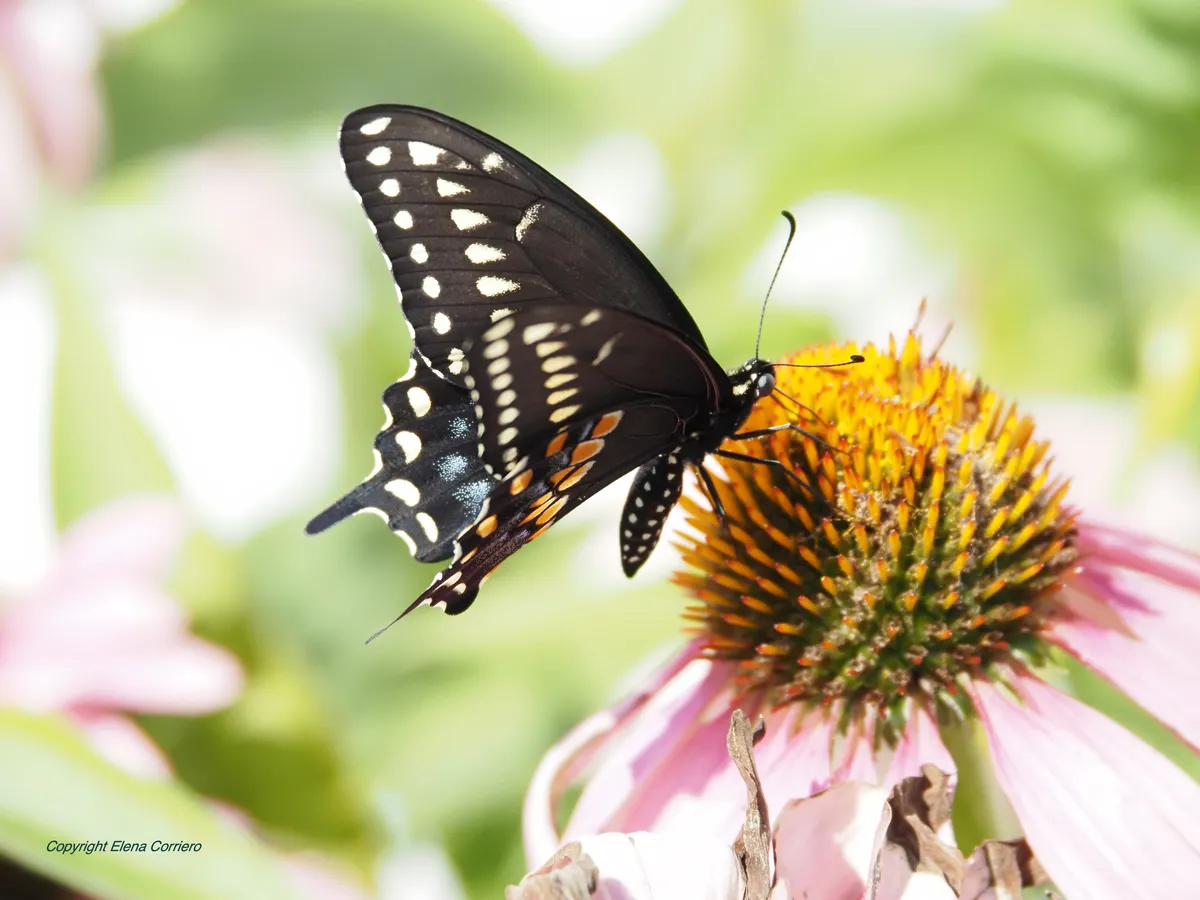
On the underside, the forewings have yellow dots, while the hindwings are marked by two rows of orange dots with a blue "powdery" area between the rows. This pattern is similar to that of another swallowtail butterfly, the Pipevine Swallowtail. The Pipevine Swallowtail ingests a chemical by feeding on the pipevine, and the chemical makes it poisonous or distasteful to various predators like birds or wasps. The mimicry helps the Black Swallowtail deter predators without actually being toxic itself.
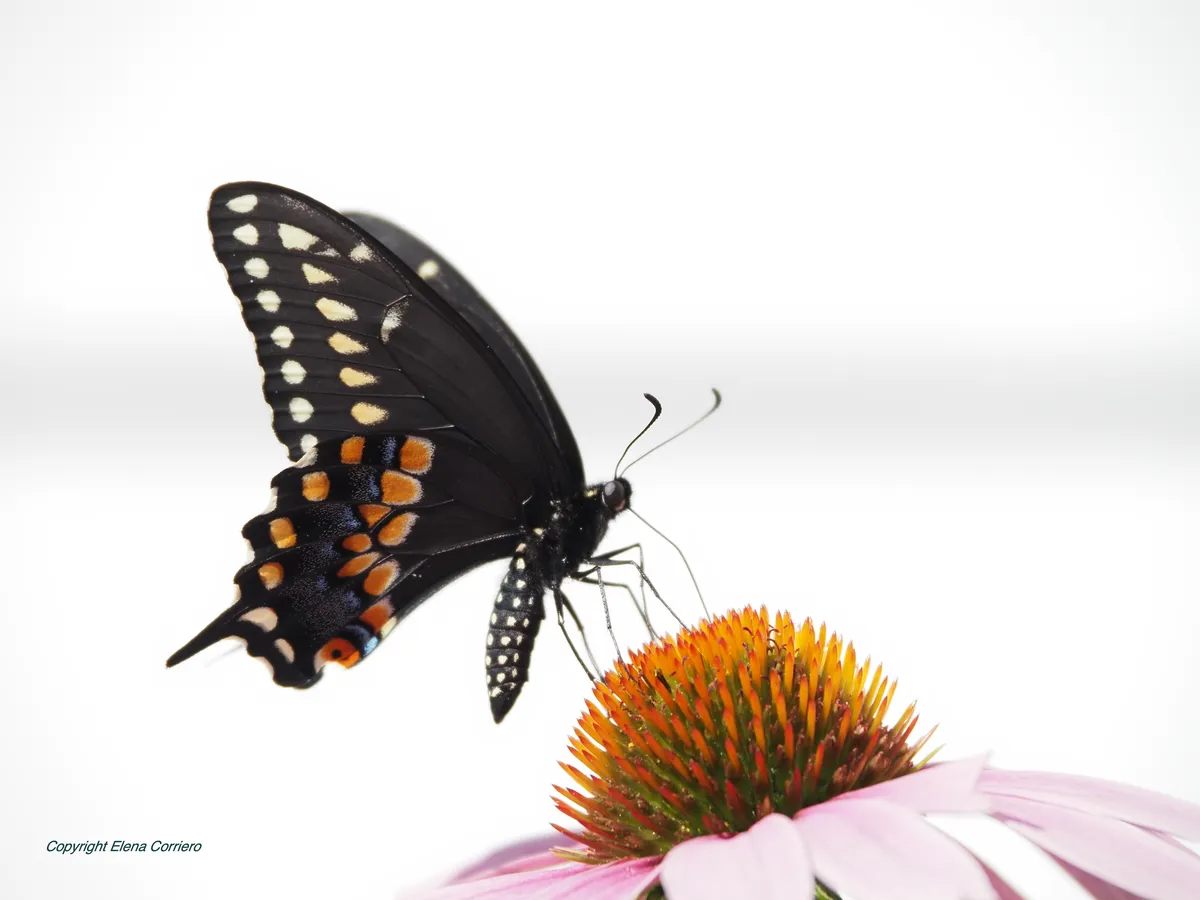
Trying to understand how butterfly wings work, I decided they are basically... magic.
The wings are actually made of layers of tiny scales that give wings their color, either through pigmentation or through physical nanoscale structures that have no intrinsic color but diffract, scatter, or interfere with light. The first type will always be perceived as the same color; scales of the second type change color depending on the viewing angle and on the light.
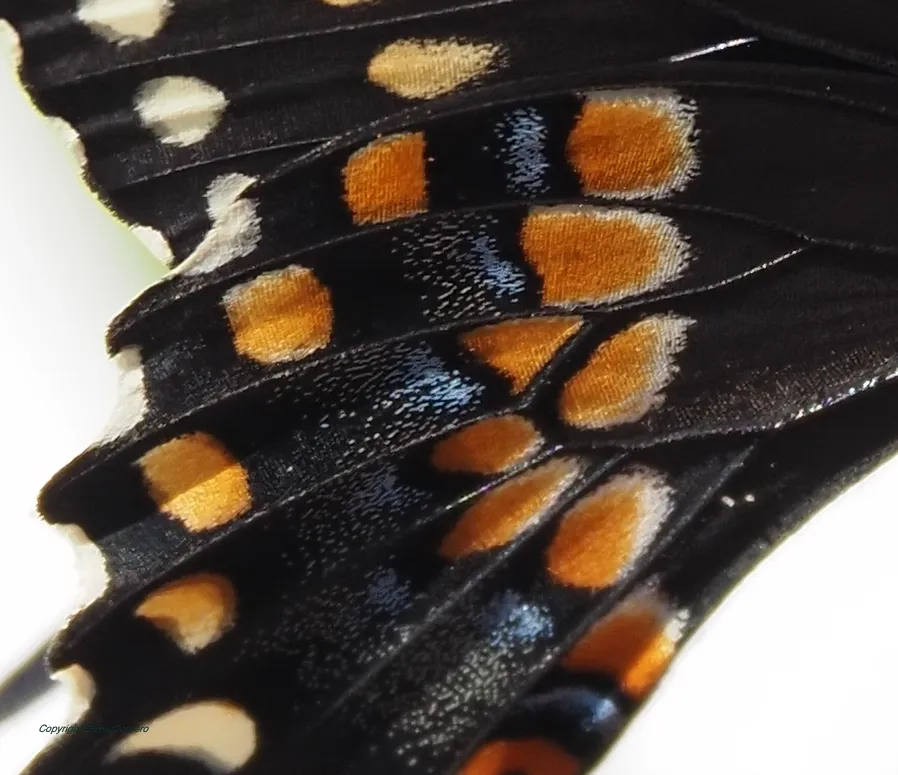
I could not find any definitive source, but my guess is that the only non-pigmented scales in the Black Swallowtail are the ones that paint its iridescent blue spots. Males have less blue than the females to enhance deterrence. The eyespots on the hindwings also serve as a defense mechanism, as they can scare off predators or direct an attack towards the edge of the wings rather than the head.
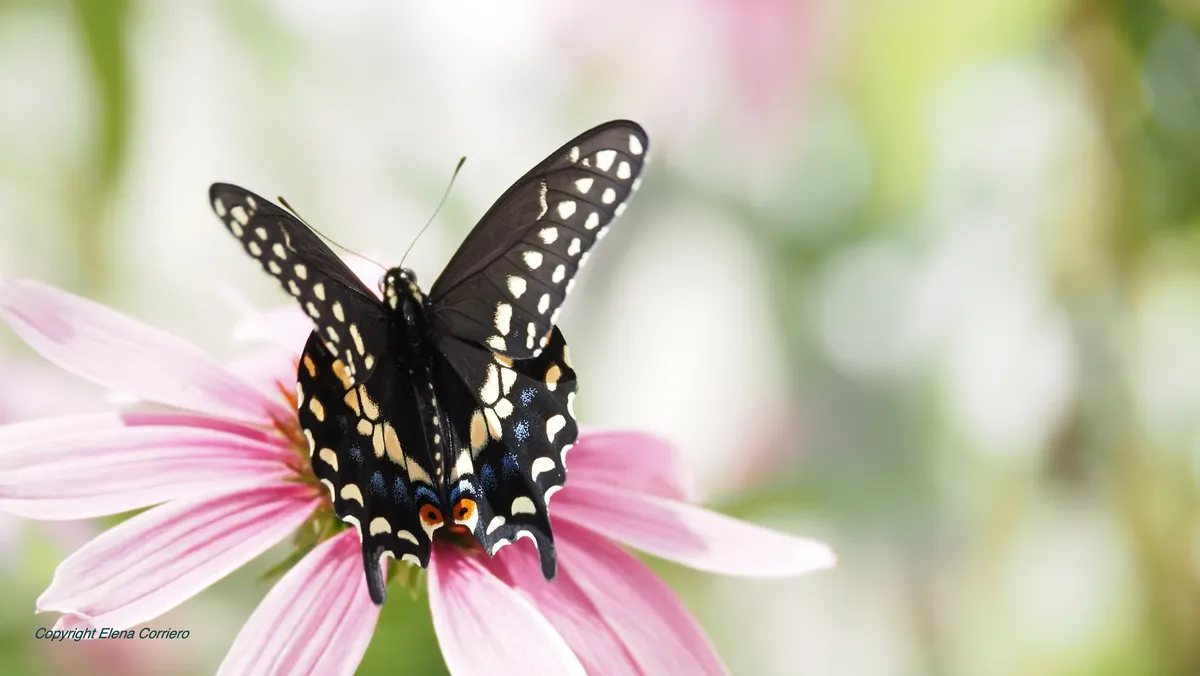
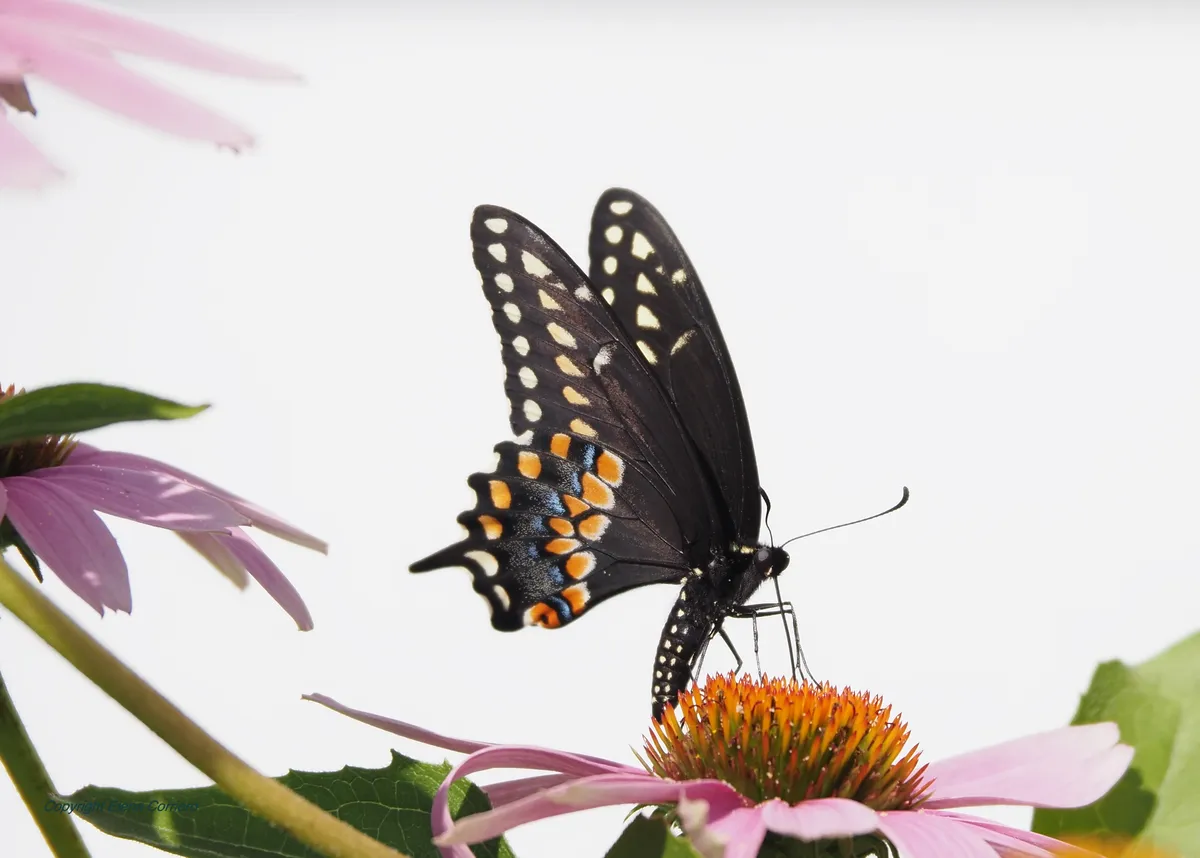
He was looking at me, wasn't he?
-All photos taken with a 14-150mm lens. No AI enhancement
Some reference links:
A really cool technical explanation of how the butterfly wings' nanostructures work