The Hunt
Today, for the first time, I witnessed the hunt. I’m still feeling in all sorts of ways about it - including guilty by association.
After lunch, I walked lazily around the house and slid into that narrow ribbon of grass between my house and the neighbor’s. The cutleaf coneflowers stood out with their bold yellow against the flimsy reed fence that spares me the view of the neighbor’s driveway. A few sweat bees were hopping from floret to floret.
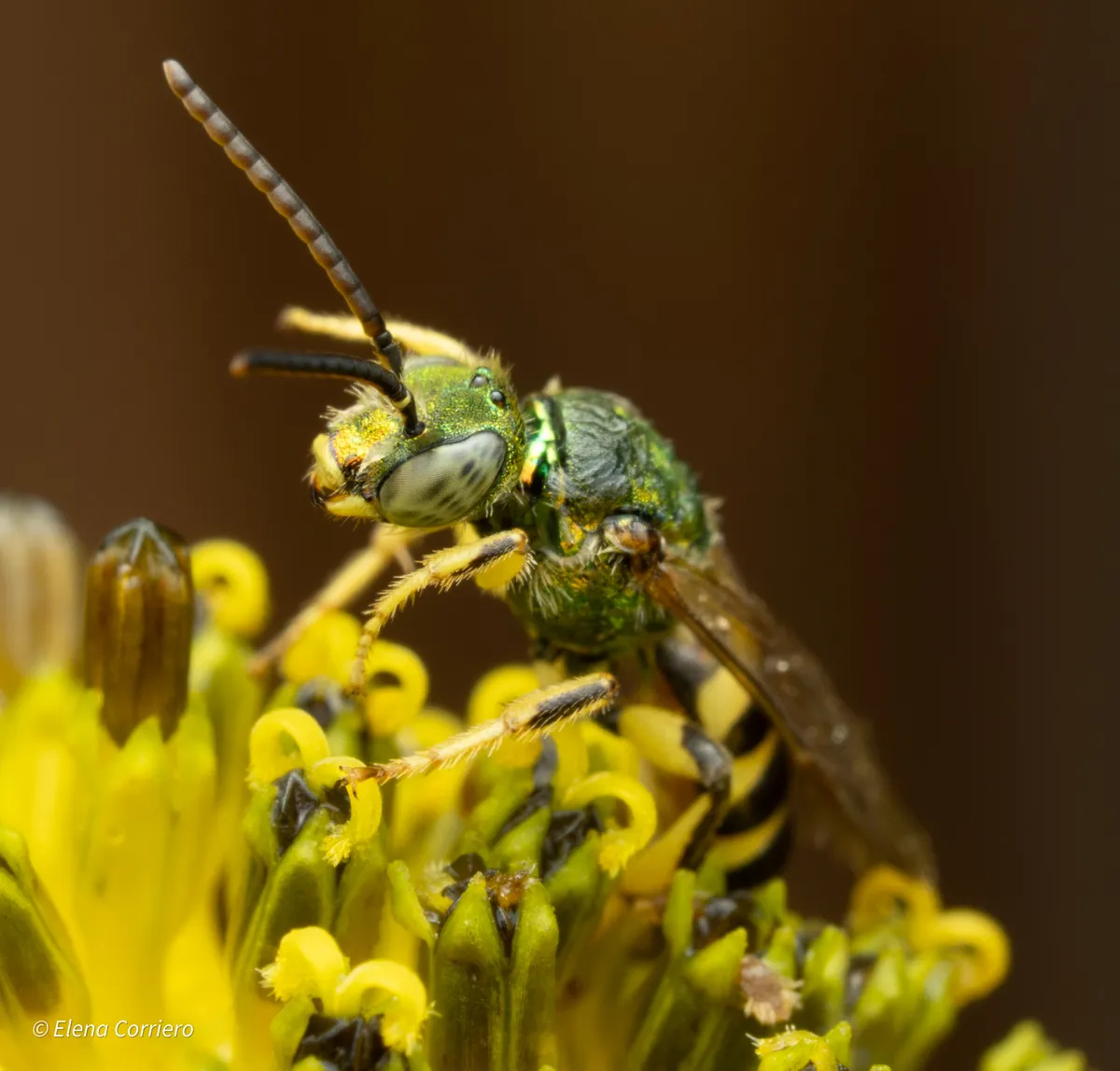 OM 60mm Macro, f11, 1/100, ISO200
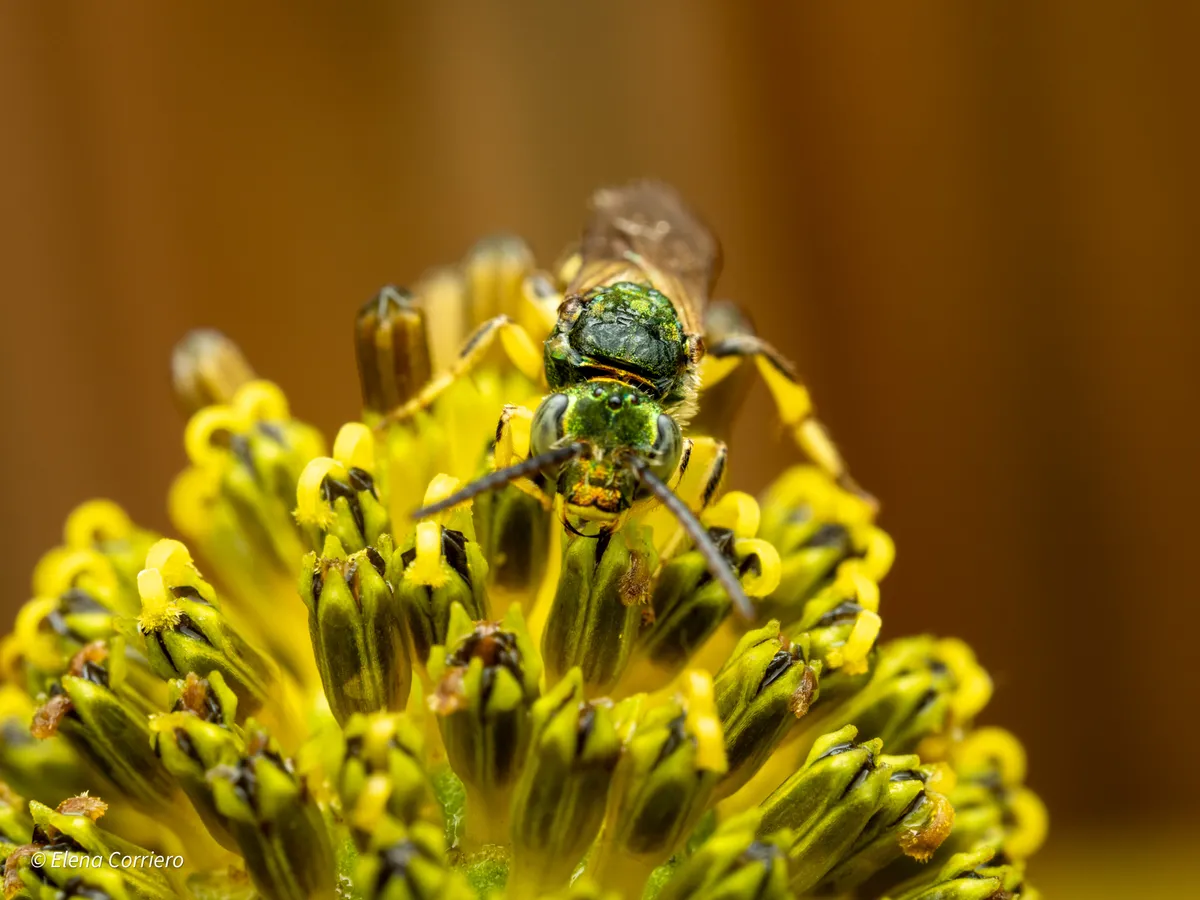 OM 60mm Macro, f9, 1/100, ISO200
I was about to head in, when something grabbed my attention. At first glance, the cone was a uniform drab brown; but then I saw it. A jumping spider!
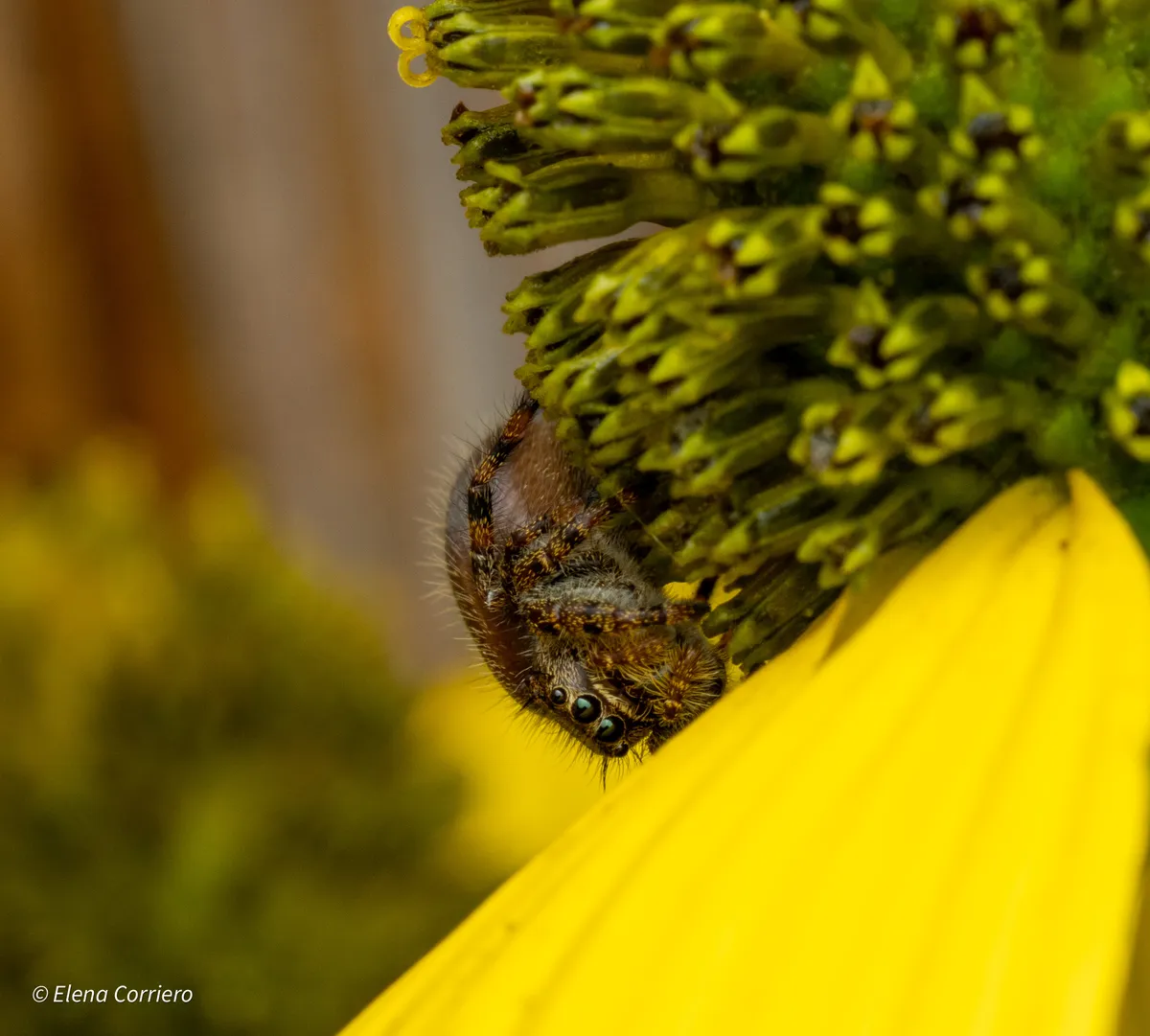 OM 60mm Macro, f11, 1/100, ISO200
Meg did not want to be photographed.
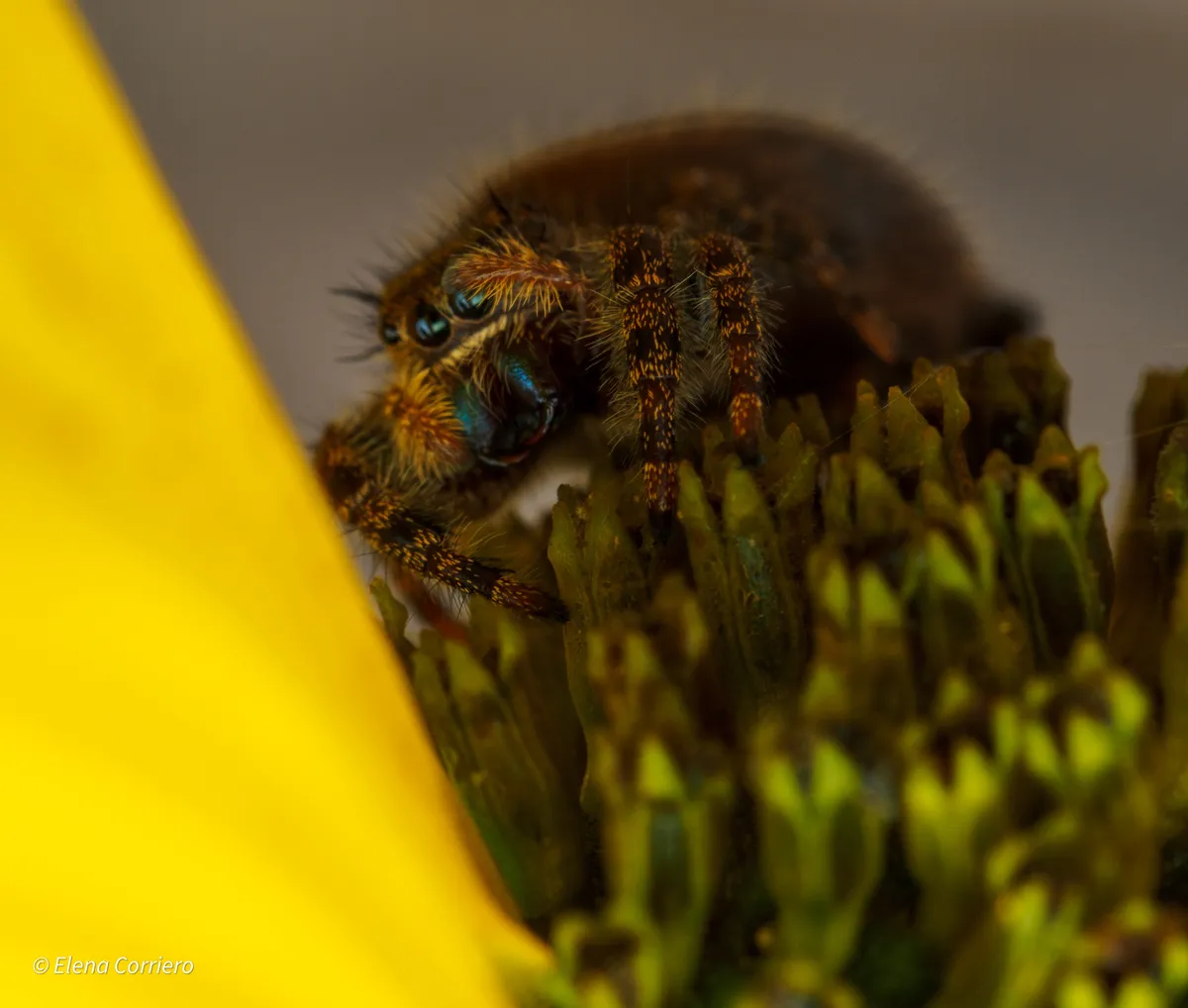 Doesn't it look like she's trying to cover her face???
OM 60mm Macro, f9, 1/100, ISO200
Doesn't it look like she's trying to cover her face???
OM 60mm Macro, f9, 1/100, ISO200
She kept moving to the opposite side of where I was, mostly facing down.
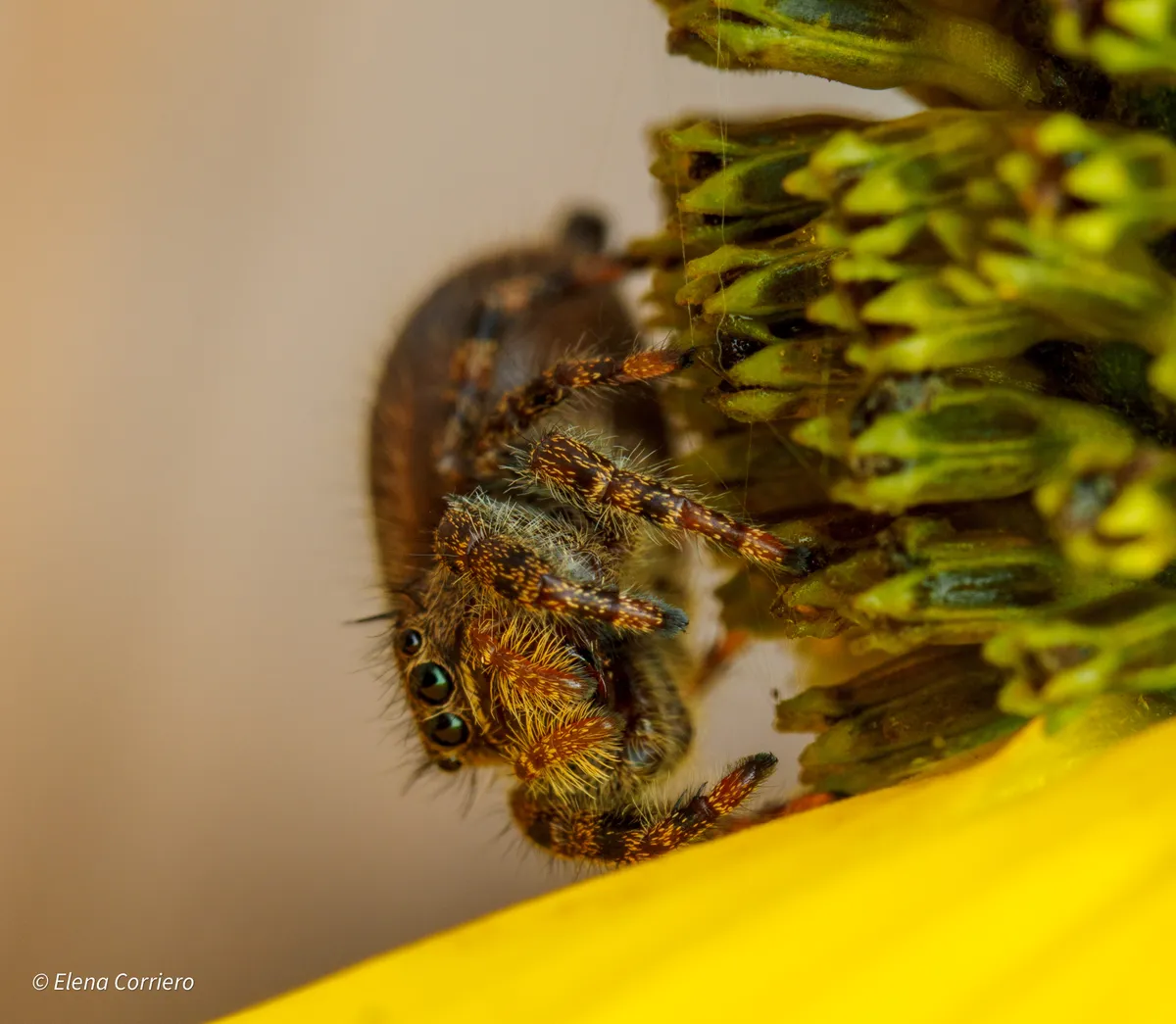 OM 60mm Macro, f9, 1/100, ISO200
I had to twist myself in very creative ways, and never really got a good shot. I kept bumping into the fence, and losing her while I was trying to bring her into my lens’ view. I was half concerned of hitting her with the lens, and half of finding myself nose to nose with her.
I did take a few photos of her butt, in the process. This revealed her thin dragline zigzaging across the floret cones, establishing tether points along the way.
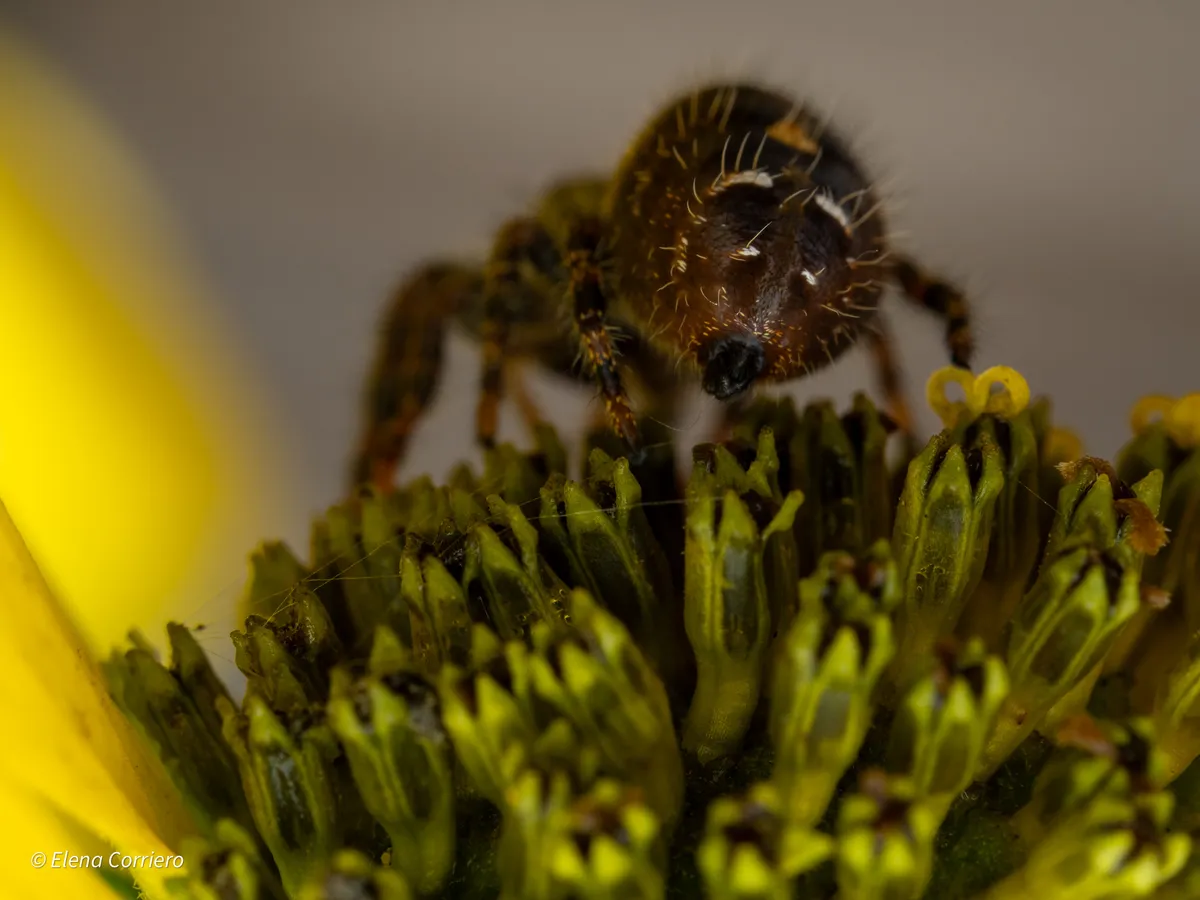 OM 60mm Macro, f9, 1/100, ISO200
While a jumping spider's silk is produced by the organ at the rear of their abdomen (photo above), they use their feet to shape and guide it (below).
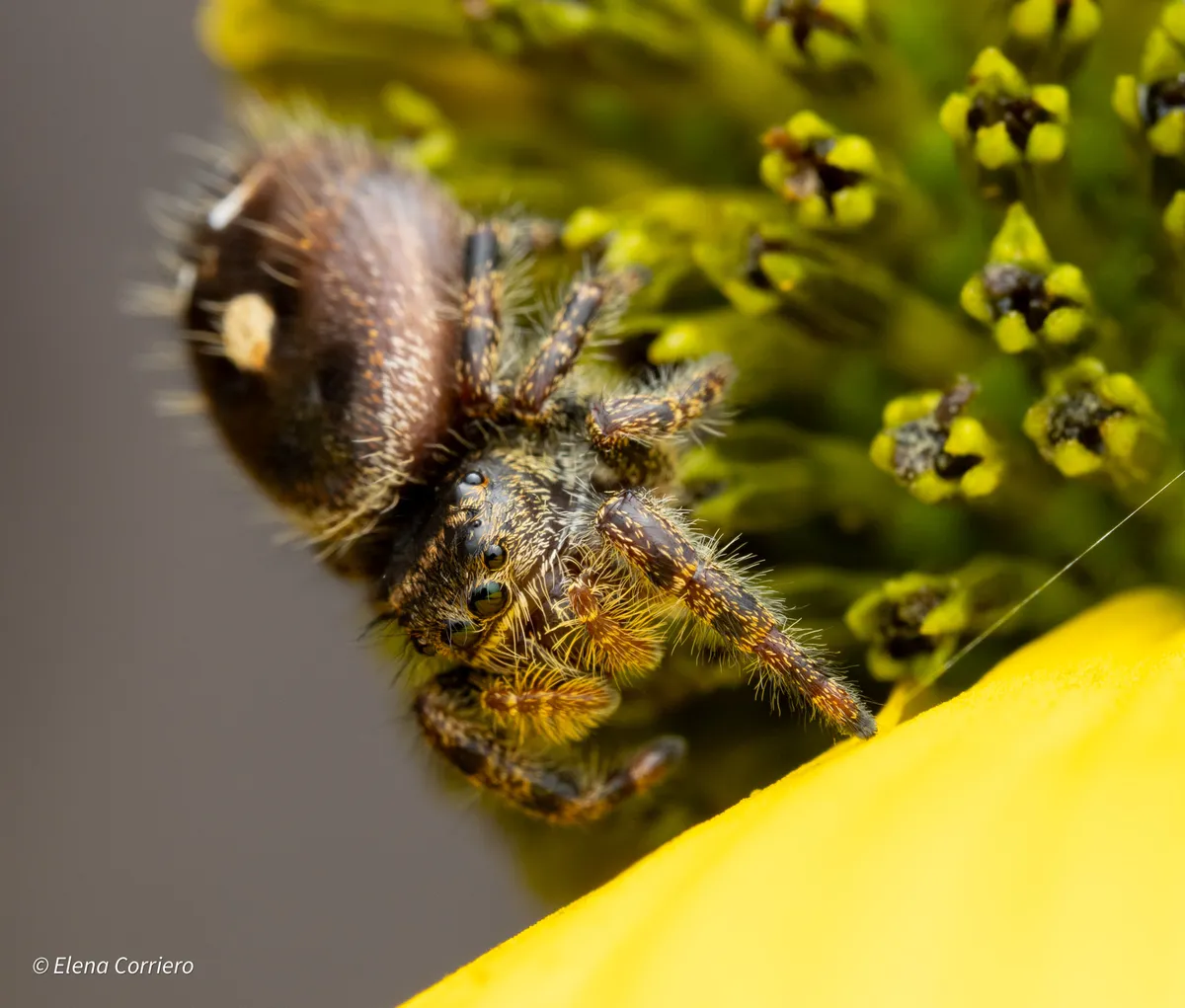 OM 60mm Macro, f9, 1/100, ISO200
[Nerd intermission: Jumping spiders don’t spin a web, nor do they use silk to immobilize their prey. They produce their silk as they move, and use it for navigation and dynamic control when jumping. When they jump, they can reach a speed of 20-27 inches/second, and they spin their silk - one of the toughest silks spun by arachnids - as they jump. This allows them to control their landing, but also to re-orient themselves mid-jump. End of nerd intermission]
After what must have been half hour of (clumsy) attempts, and at least a couple of passable shots, I decided to leave Meg alone. I was surely scaring away any other insect that she may be hoping to meet for lunch. The cutleaf coneflowers attract flies and bees, and that’s clearly why Meg had chosen that spot, but the unrequited limelight wasn’t conducive to hunting.
As soon as I stepped back, the flowers were again abuzz with green bottle flies and green sweat bees. Meg rappelled from one leaf to the leaf below using her dragline, then with two jumps positioned herself against the fence, hidden underneath a sagging flower.
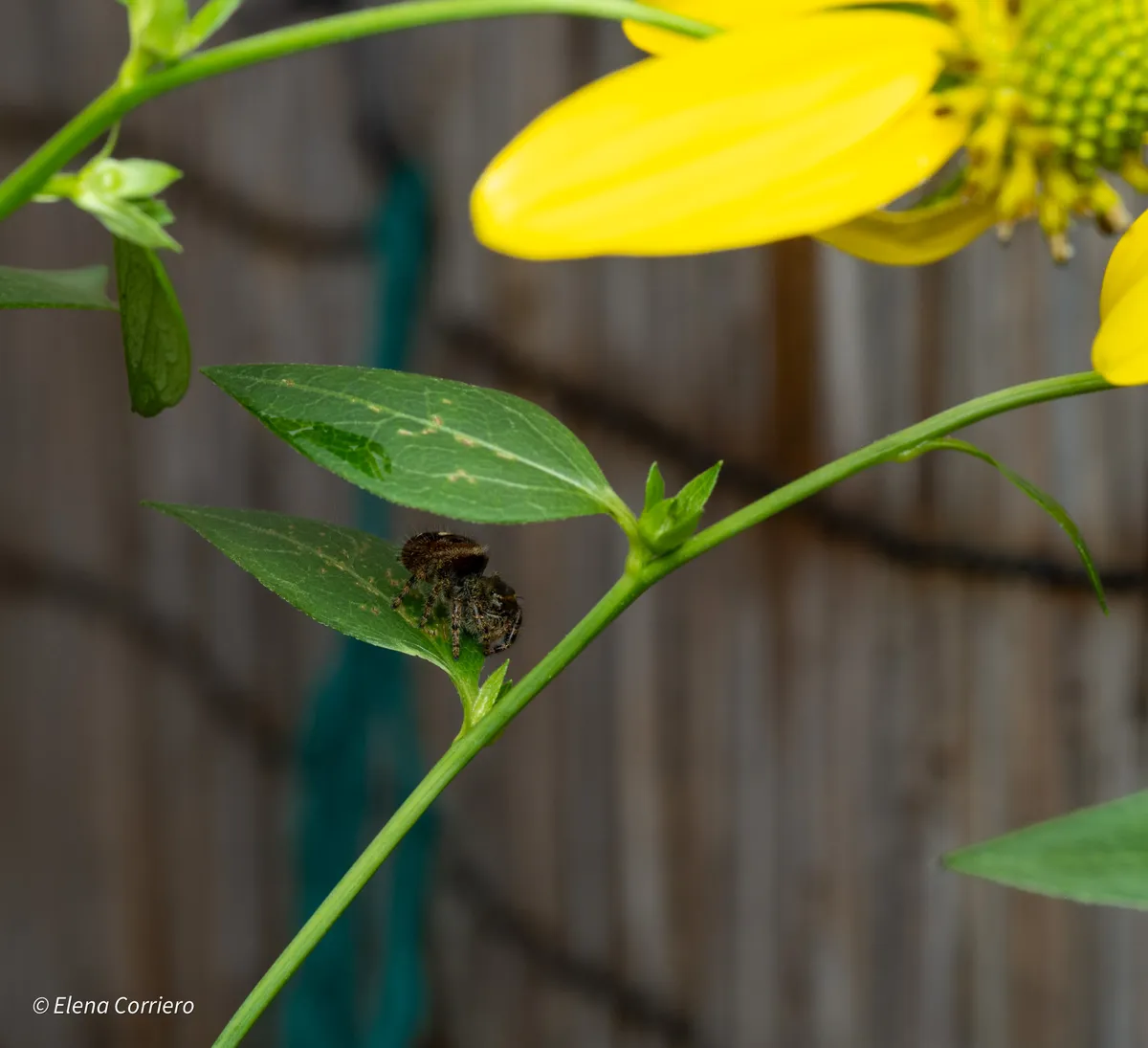 OM 60mm Macro, f9, 1/100, ISO200
It wasn’t long before a sweat bee landed on a cone close to where Meg was, and started plucking away at the pollen, oblivious to the threat. Meg slid on the reeds to position herself, paused for a moment, and sprung.
I registered her movement like the sudden release of energy of a coiled spring.
She was there, and then she wasn’t. Initially, I couldn’t even tell if she’d captured the bee.
But she had.
(If you're sensitive, you may want to skip the next few pics.)
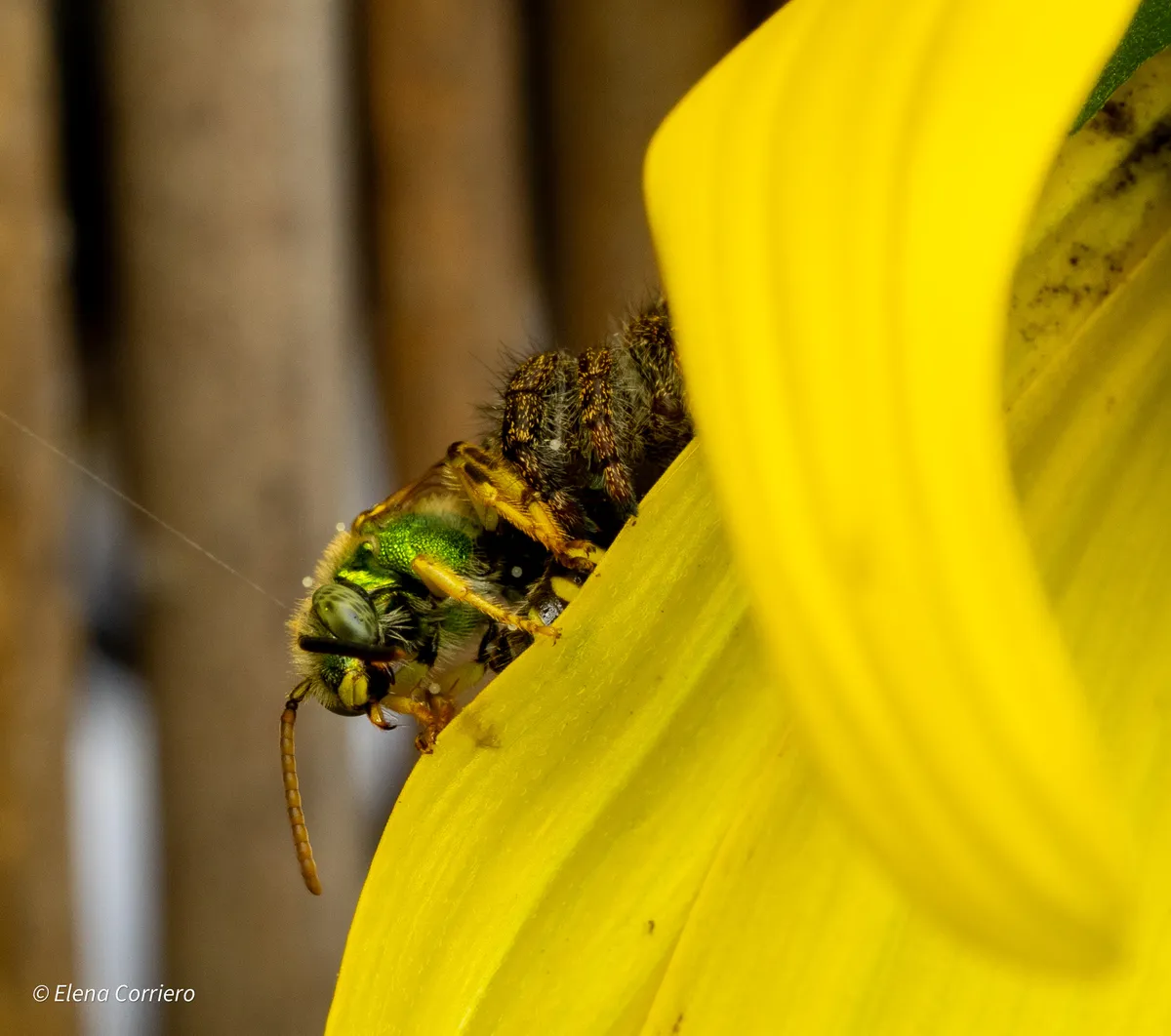 OM 60mm Macro, f9, 1/100, ISO200
The bee kept fighting for minutes, in what certainly didn’t look like a merciful or painless death. I couldn’t help but think that the bee was silently screaming, as he tried to pull himself free.
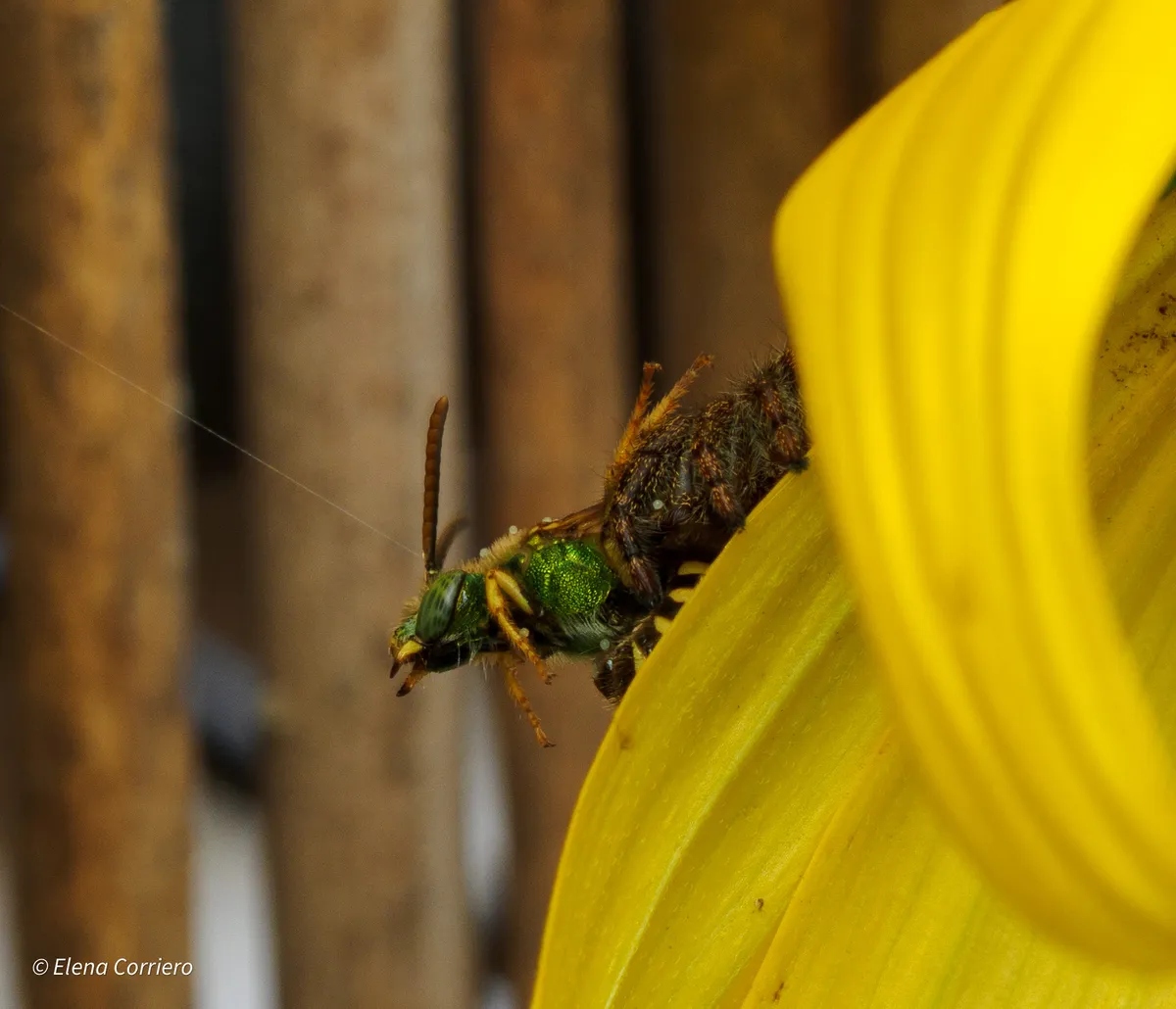 OM 60mm Macro, f9, 1/100, ISO200
I felt sorry for him, and extremely guilty for the responsibility I shared in the hunt. For letting it happen, I guess. But I also knew it wasn’t my place to intervene. The spider needed to eat, too. And while tragedy was being consumed (literally) on one leaf, another bee buzzed on a nearby petal, oblivious to the fate he had been spared.
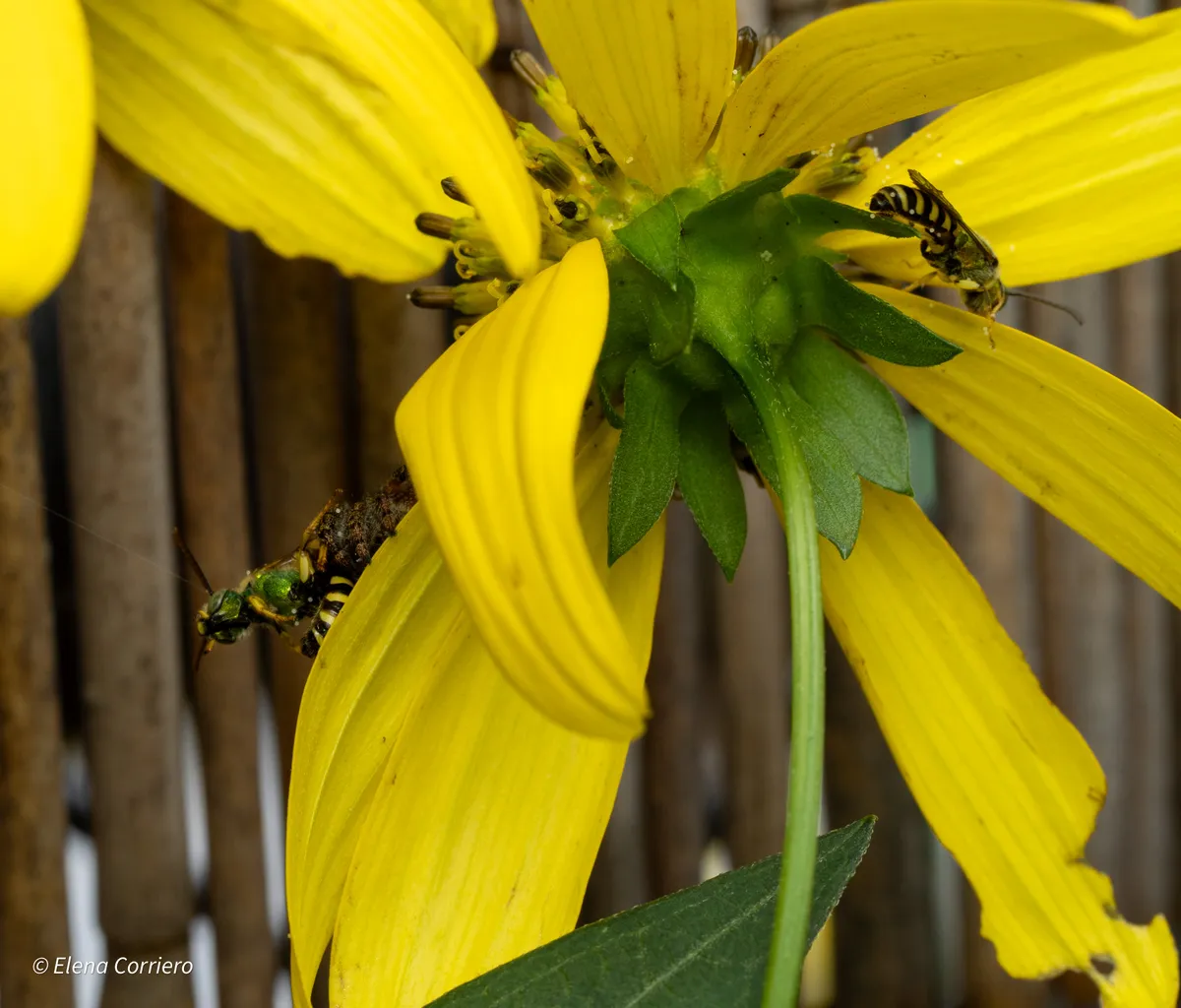 OM 60mm Macro, f9, 1/100, ISO200
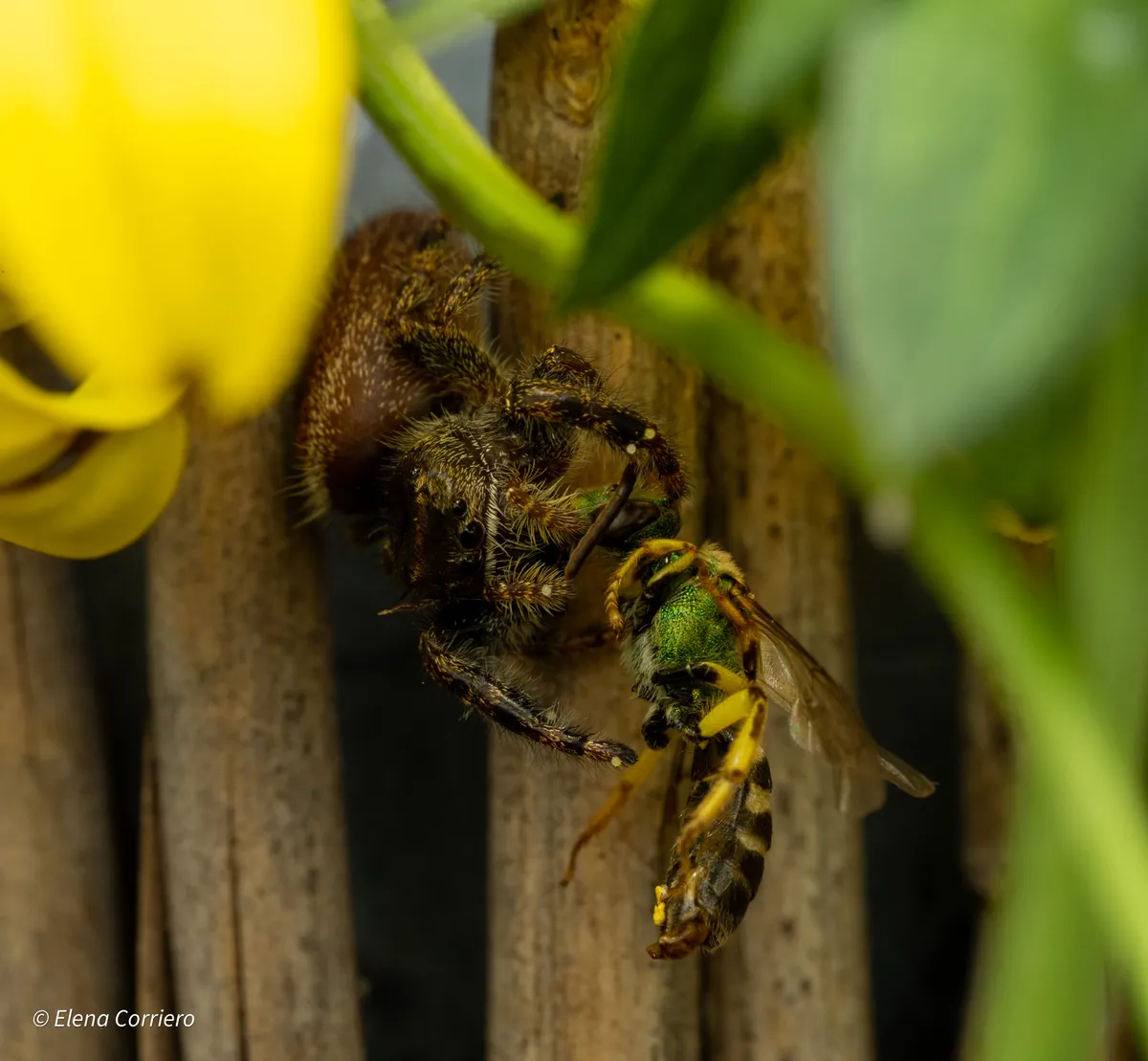 OM 60mm Macro, f9, 1/100, ISO200
When I went back to the scene, an hour or so later, Meg was making herself a cocoon by webbing together a coneflower’s petals.
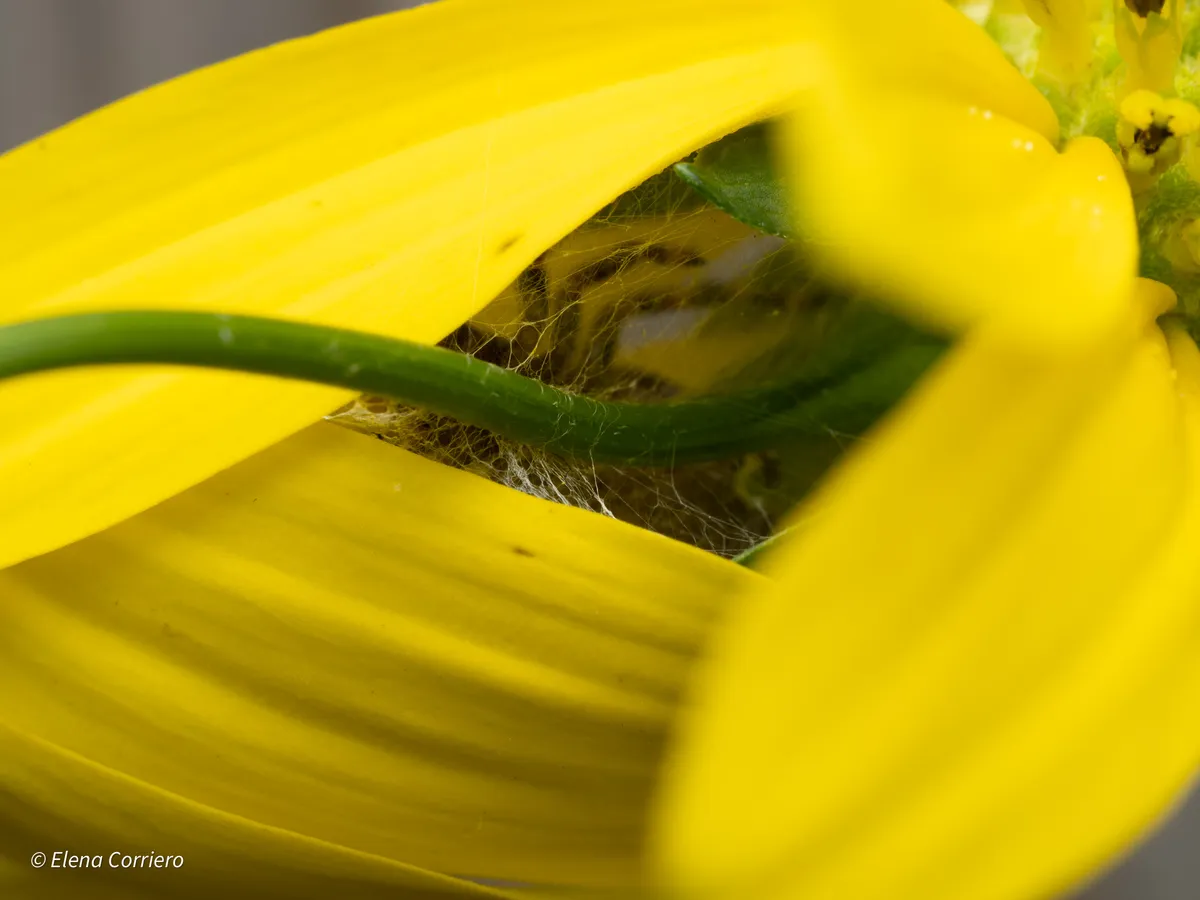 OM 60mm Macro, f9, 1/100, ISO200
I could see her moving inside her hammock, although once or twice she poked out - I think she wanted to make sure that I (or anything else) wasn’t a threat.
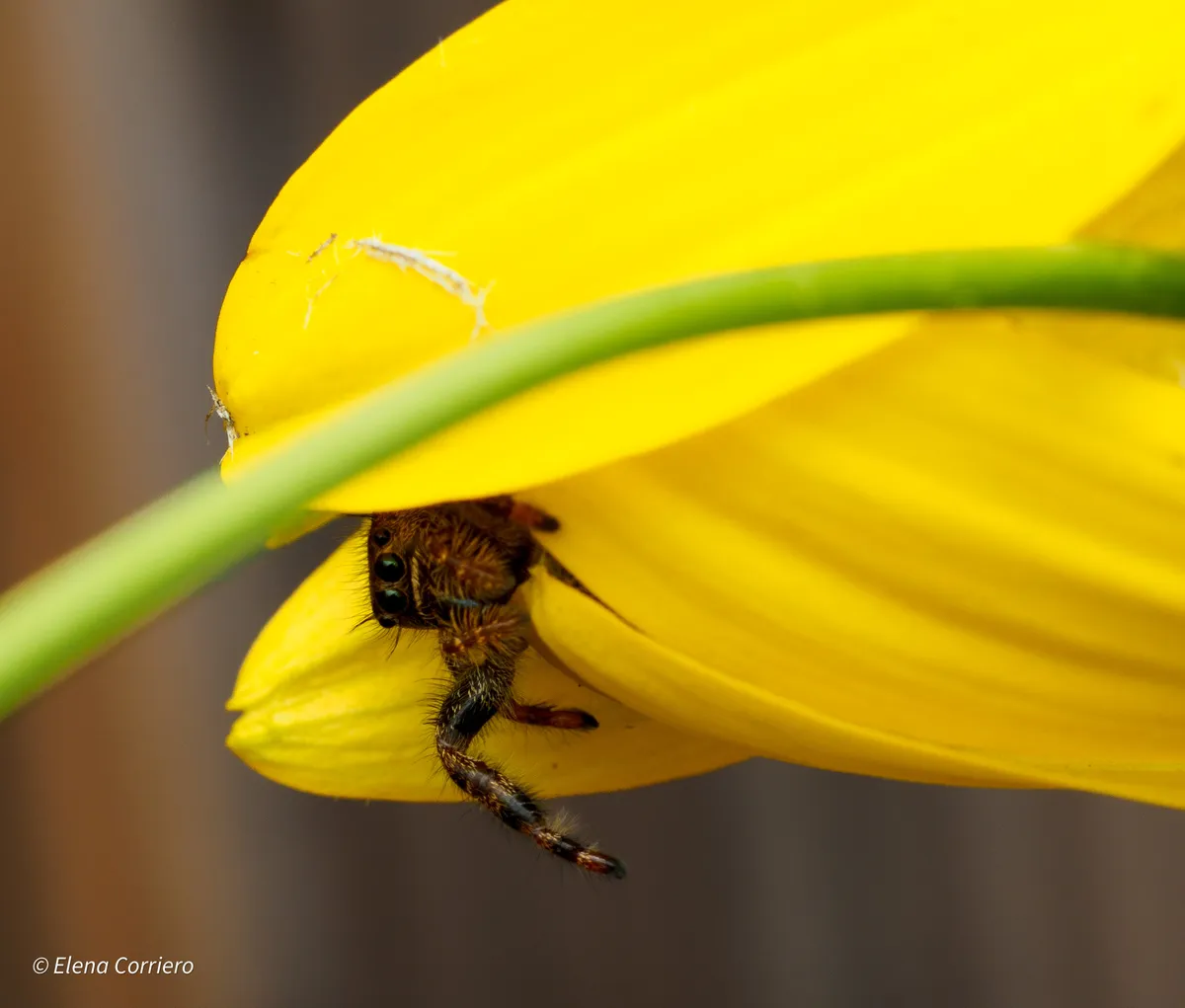 OM 60mm Macro, f9, 1/100, ISO200
My first thought was that she may be laying her eggs, but in all likelihood she was getting ready to molt, which is how spiders grow. She will retreat in her silk enclosure and break out of her old (and now too small) exoskeleton. While the new exoskeleton is still soft, she’ll bring herself to her new larger size, remaining in the nest until her carapace is fully hardened. This is exactly how lobsters grow, too. And during molting, both can regenerate lost limbs!
Despite some lingering sadness, I was glad that Meg had had a chance to feed, and absorb the energy she needed for this extremely taxing and risky process. Hopefully, I’d see her come out in a few days, ready for a new stage in her life. I sighed, bowed silently to nature, and left.
Elena Corriero
Rapid mid-jump production of high-performance silk by jumping spiders Growing spiders by Cornell University